Al Freni/The LIFE Images Collection/Getty Image
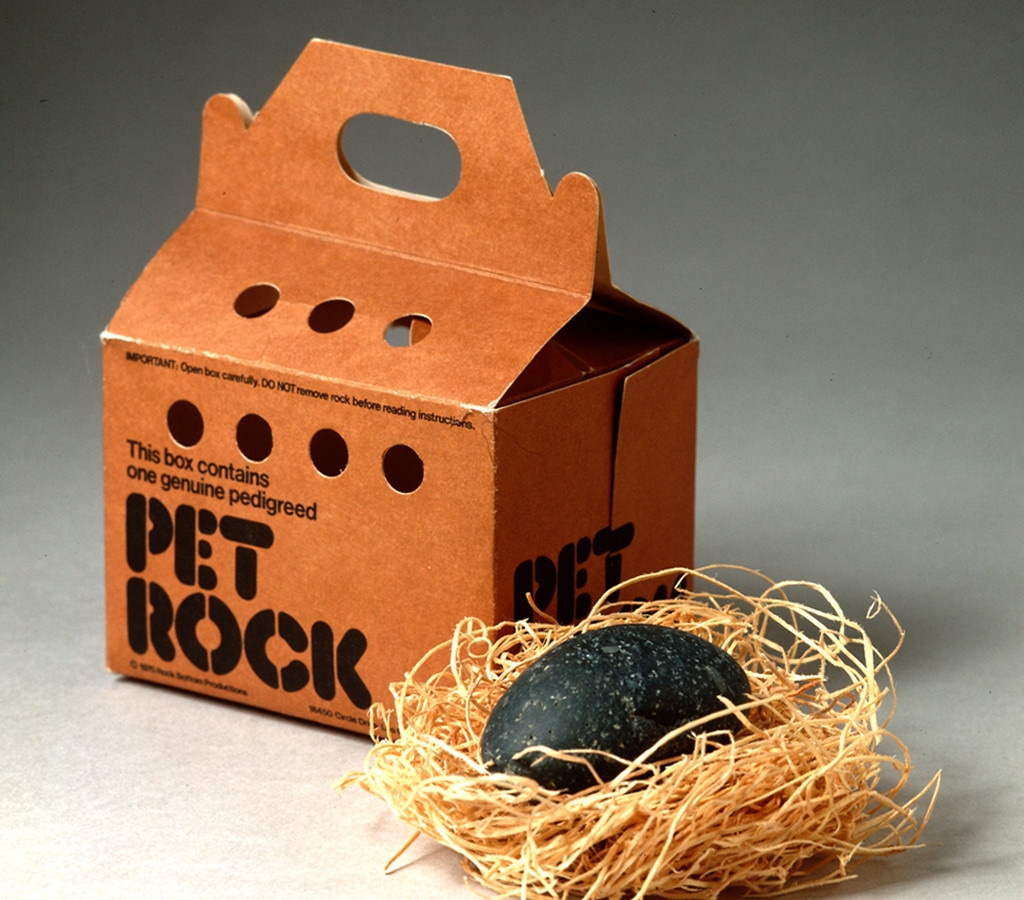
LOS GATOS - In 1975, Gary Dahl, an advertising guru, found himself between a rock and a hard place when inspiration struck in a California bar. As his friends lamented their pet peeves, Gary envisioned a pet that wouldn't bark up the wrong tree: the Pet Rock. This idea wasn't just solid; it was groundbreaking. Packaged in boxes with air holes and straw, these rocks became the pet sensation that didn’t need to be walked, fed, or groomed, and most importantly, they were rock-solid silent.
For a fleeting six months, Pet Rocks were the bedrock of holiday shopping, making Gary a millionaire. With his newfound wealth, he opened "Carry Nations," a bar in Los Gatos, CA that stood as a monument to his quirky venture. Despite facing lawsuits and threats from those who took his pet project for granite, Gary's sense of humor was never eroded.
The Pet Rock came with a 32-page manual that was a quarry of puns, teaching owners how to care for their sedimentary companions. Commands like "sit" and "stay" were a breeze, but "roll over" might have required a gentle nudge. Gary proved that with a little creativity, you could not only move mountains but sell them too, one rock at a time. The original retail price was $3.95 selling 5 million in the first 6 months earning Dahl $5 million dollars.
ROCK ON!